A centuries-old proclamation will ring out beside Cambridge’s Leper Chapel on Saturday 5 September, as Stourbridge Fair is brought back to life on the ground where it grew from a three-day medieval market into one of the largest fairs in Europe.
For one afternoon, the Leper Chapel and Barnwell Meadows will fill with medieval characters, craftspeople, musicians, dancers and storytellers. It is not simply an event inspired by history. It is a re-enactment rooted in the place where that history unfolded.
The fair is free to attend and runs from 12 noon to 4pm.
Where the story began
The Leper Chapel dates from around 1125 and is the second-oldest complete building in Cambridge. It was originally built as part of an isolation hospital for people affected by leprosy, beyond the boundaries of the medieval town.
Stourbridge Fair began in the 12th century. In 1211, King John granted a charter to the Leper Hospital allowing it to hold a three-day market around the Feast of the Holy Cross. Rent from the stalls contributed to the hospital’s income, alongside income from its landholdings and charitable giving.
What began as a small market beside the chapel would grow into something extraordinary.
Its location played an important part. The chapel stood close to Newmarket Road, an important route into Cambridge, and within reach of the River Cam. At a time when roads were difficult and expensive to travel, the waterways connecting Cambridge with King’s Lynn, the Wash and London made it easier to transport people, fragile items and goods in quantity.
Traders and buyers began arriving from much further afield. People came to purchase provisions for their households, while merchants bought stock in bulk to sell elsewhere. The fair became known as a place to discover goods that could be difficult to obtain anywhere else.
 A temporary town beside the Cam
The original three-day market gradually developed into a vast temporary trading town. By the 16th century, Stourbridge Fair ran from 24 August until 29 September.
The fair had its own streets, officials and rules. Some areas were named after the goods and trades found there, including Garlic Row, Oyster Row and Mercer’s Row. Visitors came not only to buy and sell, but also for entertainment, spectacle and the opportunity to gather with others.
By the 18th century, Stourbridge Fair had become one of the largest fairs in Europe. Its scale and atmosphere were recorded by writers including Samuel Pepys and Daniel Defoe, who visited the fair in 1725.
The Leper Hospital had stopped admitting people affected by leprosy by 1279, but the chapel’s connection with the fair continued for centuries. By 1750, it was no longer being used as a place of worship. Instead, it was used to store the fair’s stalls and even served as a pub during the event.
The final traditional Stourbridge Fair was held in 1933 and it was formally abolished the following year. Cambridge Past, Present & Future revived the fair as a re-enactment in 2004, restoring the connection between the event and the Leper Chapel.
The historic Cry rings out again
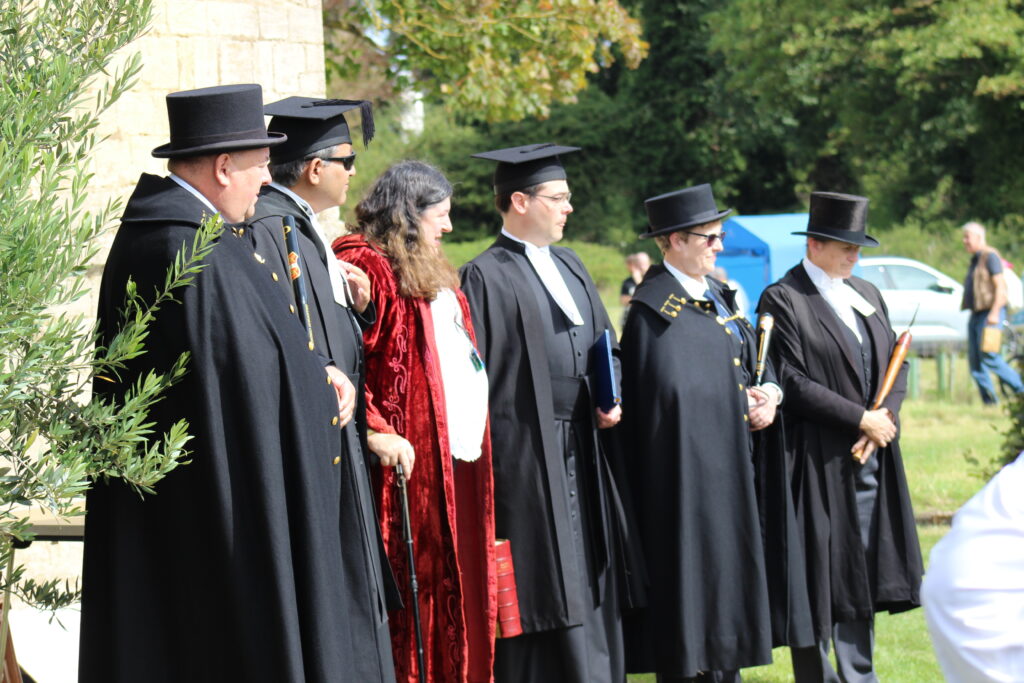
This year’s fair will begin at noon with its traditional proclamation by the University Proctors, accompanied by marshals and constables. The Deputy Mayor of Cambridge will also attend the opening ceremony.
Known as the “Cry”, the proclamation set out the rules of the historic fair. It governed everything from the sale of beer and the quality of goods to fines, public order and unacceptable behaviour.
Hearing it proclaimed at the Leper Chapel connects the modern event directly with the customs and ceremonies of the original fair.

History you can encounter
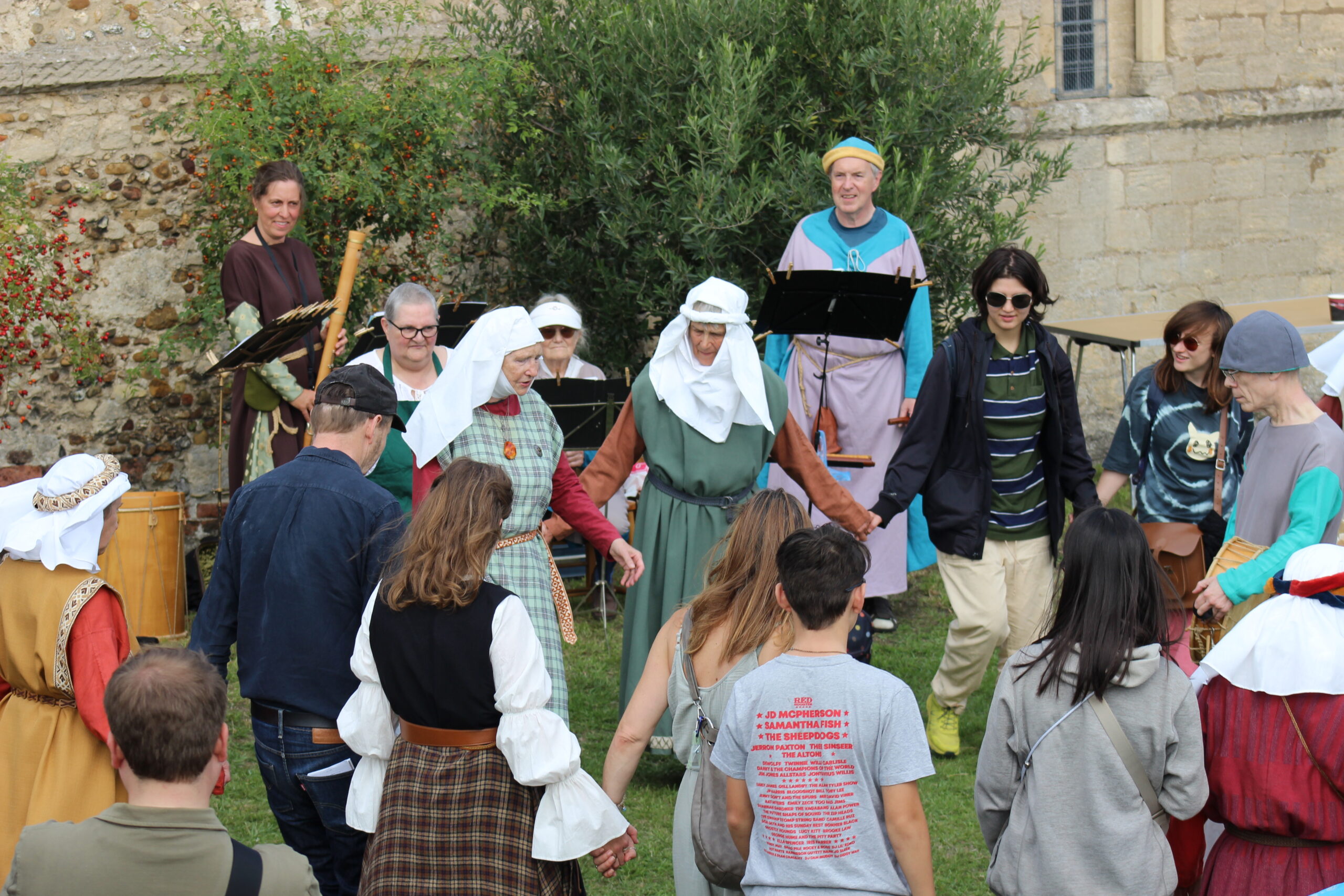
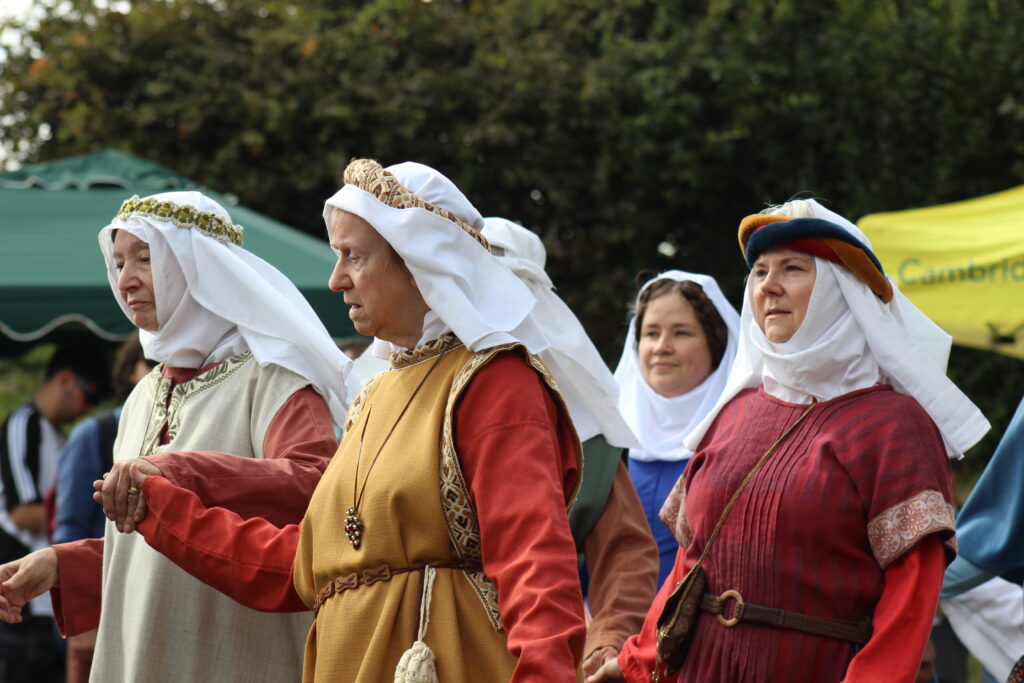
Across the afternoon, visitors will meet medieval characters and explore living-history displays from Grantanbrycg and Flint Hearth. There will be traditional fair dancing from the Capriol Society for Early Dance, storytelling, puppetry, a medieval minstrel and music from the Four Larks Brass Band.
The Grade I-listed Leper Chapel will be open throughout the event, offering a rare opportunity to step inside one of Cambridge’s most important historic buildings. Talks in the chapel will explore the history of the site and the fair, as well as medieval beliefs, plague and leprosy.
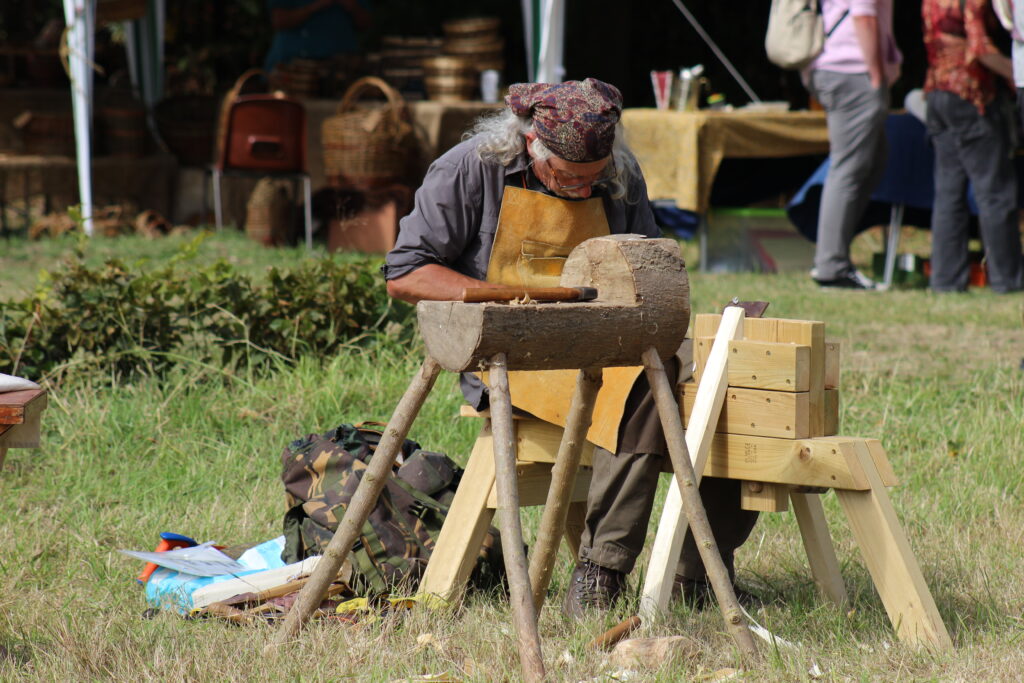
Traditional and heritage crafts will be part of the day too, including bookbinding, basketry, pottery, green woodworking, wool crafts and handmade boxes. Independent makers and local community organisations will also have stalls at the fair.
For CPPF volunteer and historical bookbinder Fabio Marzo, the event creates a living relationship with the past.
“Celebrating Stourbridge Fair is about feeling connected to a longer history and a longer story. It is a moment of creativity and community, and that sense of belonging makes what we do more meaningful.
“I joined Cambridge Past, Present & Future because of the fair. I now have a stall where I demonstrate historical bookbinding and show people what it means to bind a book by hand. Other people bring different crafts and trades, so the fair becomes a living connection with its past.”
That is the heart of the modern Stourbridge Fair. Its history is not placed behind glass. It is expressed through people, skills, stories, music and ceremony, on the ground where the fair first began.
Join us at Stourbridge Fair
Come and experience more than 800 years of Cambridge history at the Leper Chapel and Barnwell Meadows.
Date: Saturday 5 September 2026
Time: 12 noon–4pm
Location: The Leper Chapel and Barnwell Meadows, Newmarket Road, Cambridge
Admission: Free
The site is close to Cambridge United Football Club. Please see the event page for full programme, travel and accessibility information.