1949: Before AI, there was EDSAC

Walk into almost any conversation about artificial intelligence today and you’ll hear talk of rapid progress, powerful models and the future of computing. Yet many of those conversations can be traced back to a room in Cambridge more than 75 years ago.
On June 23rd 2026, Cambridge Past, Present & Future unveiled a Blue Plaque to mark the site of EDSAC, one of the most important computers ever built.
At first glance, EDSAC hardly resembles the computers we know today. It weighed around two tonnes, filled an entire room and was programmed using paper tape fed into the machine by hand. Researchers even queued their programs on what was, quite literally, a washing line.
But what mattered wasn’t its size. It was what it made possible.
When EDSAC began operating in May 1949, it became the first practical stored-program computer to go into general use. Unlike earlier machines that had to be rewired for every new task, EDSAC could store both instructions and data in memory, allowing it to tackle many different kinds of problems.
That seemingly simple change transformed computing.
For the first time, scientists from across the University could use one machine to solve complex calculations that had previously been impractical or impossible. Research accelerated. New scientific questions became answerable. The machine contributed to work that ultimately led to three Nobel Prizes in Chemistry, Physiology or Medicine, and Physics.
Its influence extended even further. EDSAC’s successor, EDSAC 2, supported Francis Crick and James Watson as they continued their DNA research following the discovery of its structure using Rosalind Franklin’s experimental evidence.
Many of the ideas pioneered through EDSAC also became lasting foundations of computer science. Concepts such as subroutines remain part of programming today, while Cambridge researchers went on to contribute to the development of programming languages, operating systems, the BBC Micro and later the Raspberry Pi.
Listening to the talks at the plaque unveiling made one thing particularly clear. EDSAC was not simply an early computer. It marked a turning point, when computing moved from an experimental idea into a practical tool that researchers could rely on every day.
That shift changed the direction of science, engineering and technology. It also laid important foundations for the digital world we now take for granted, including today’s advances in artificial intelligence.
As Professor Alastair Beresford, Head of the Department of Computer Science and Technology, said at the unveiling:
“Both the machine and the science it enabled were truly ground-breaking.”
Mike Hakata, Chief Executive of Cambridge Past, Present & Future, reflected on the wider significance:
“Every day, billions of people benefit from technologies whose origins can be traced to pioneering computing work carried out in Cambridge. The EDSAC represents a turning point in that story, when computing moved from theory into practical reality.”
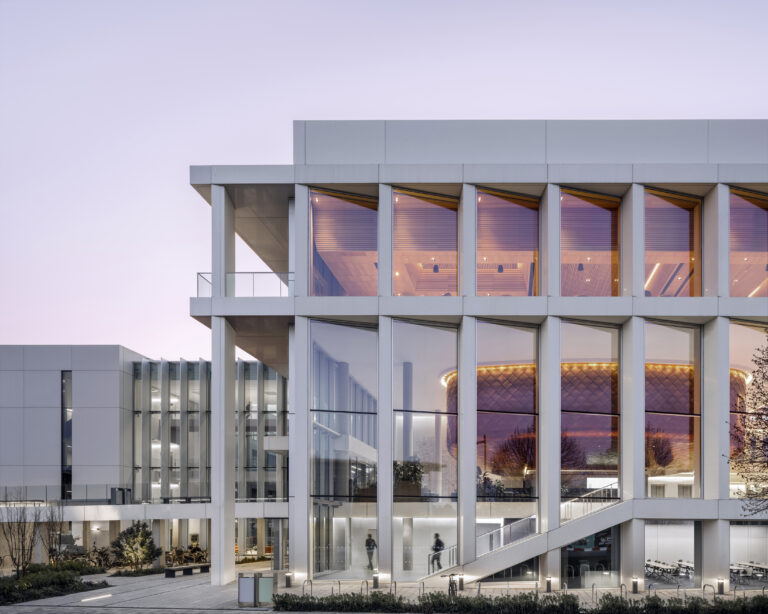
The Blue Plaque will eventually be installed on the David Attenborough Building, where EDSAC was originally built, ensuring that future generations can discover the place where one of Cambridge’s most remarkable stories began.
It’s easy to overlook the origins of technologies that now shape everyday life. But sometimes a small plaque marks something much bigger: the moment an idea became reality and quietly changed the world.