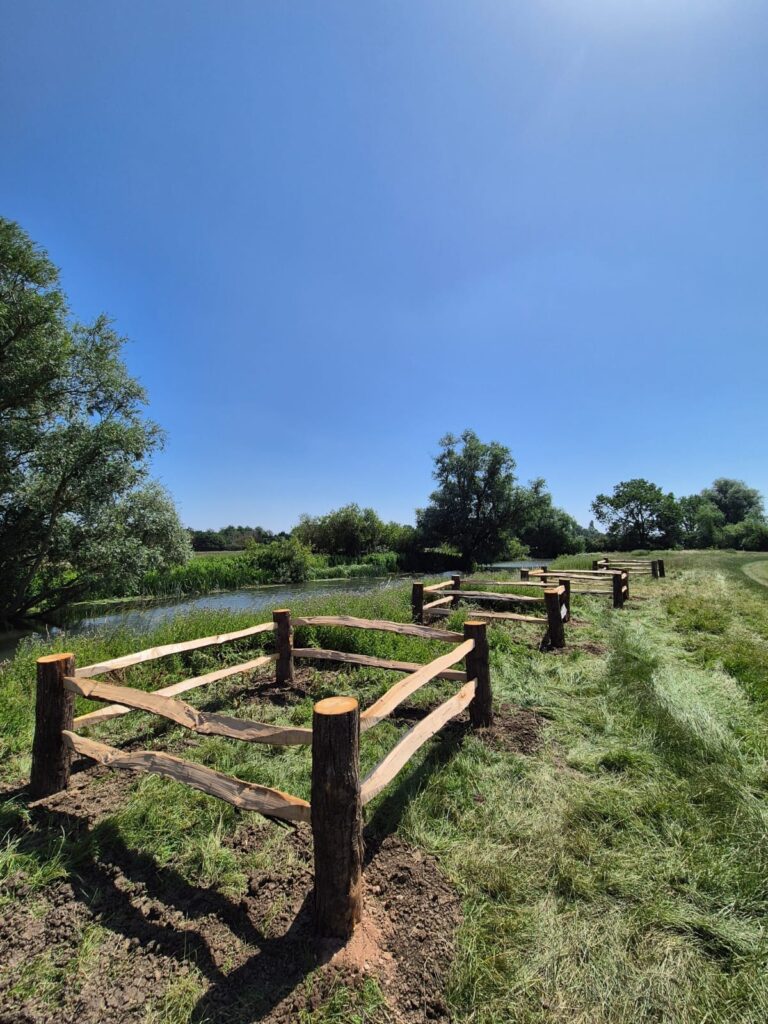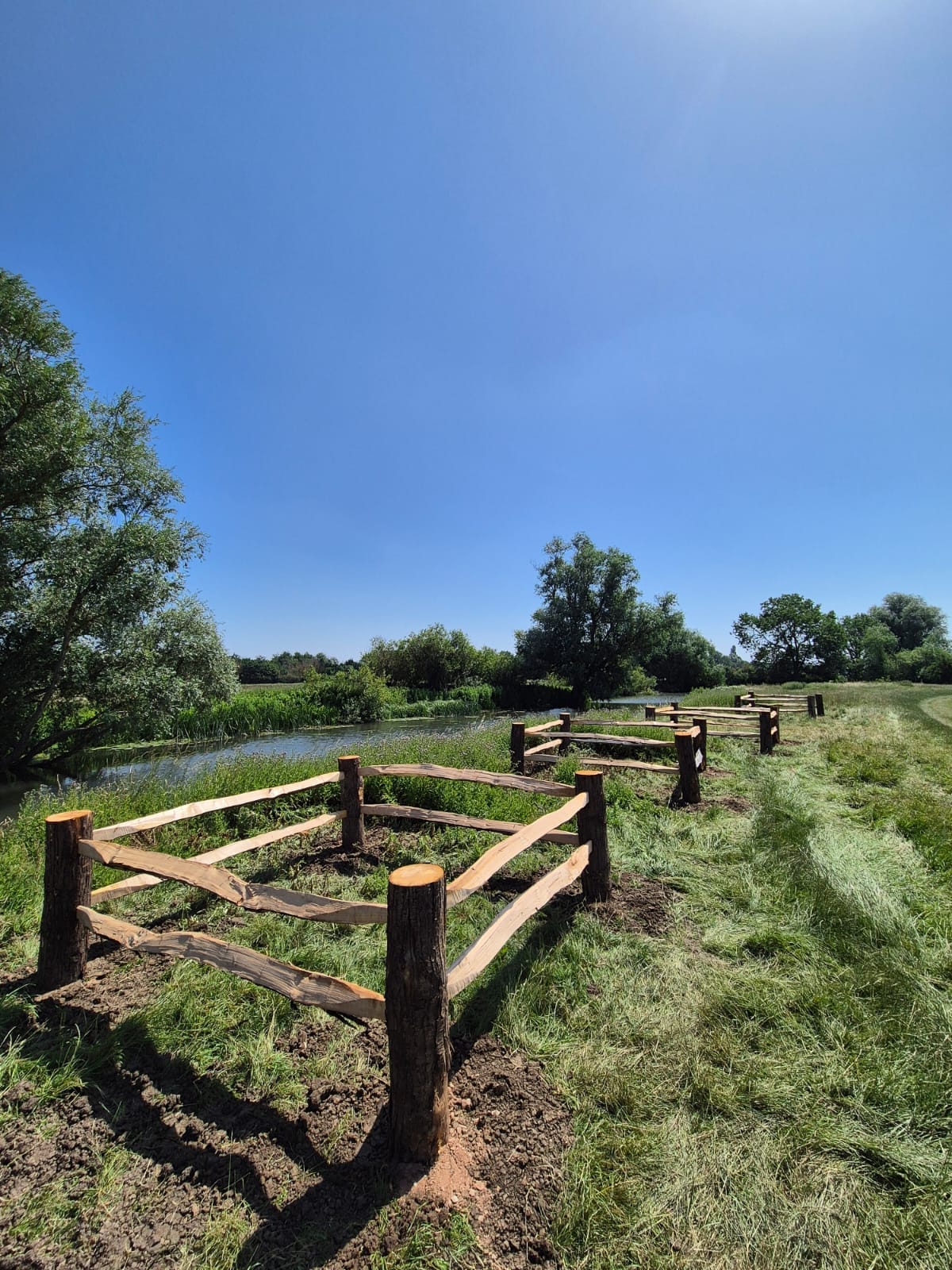
As part of the DiversiTree and River Cam CAN projects, Cambridge Past, Present & Future (CPPF), working in partnership with King’s College Cambridge and Cambridge City Council, has begun the first stage of the project by installing specially designed tree guards. Due to be completed this week, the guards will protect the young trees from grazing cattle while they become established after planting during the autumn and winter planting season
The project is centred on a simple but important principle: caring for landscapes means thinking well beyond the present day. By planning ahead through succession planting, the partnership is helping to ensure that Grantchester Meadows continues to support wildlife, strengthen the riverside landscape and provide enjoyment for future generations.
Thinking decades ahead
The planting locations were carefully selected following a survey of veteran trees along a 10-kilometre stretch of the River Cam, carried out as part of the DiversiTree project. The survey identified where succession planting would help replace ageing riverside trees over time, ensuring that new trees become established long before today’s veterans naturally decline.
Many of the mature willows that define the landscape at Grantchester Meadows are already ancient. While fallen or partially collapsed willows can sometimes appear untidy, they remain some of the richest wildlife habitats in the landscape, supporting fungi, invertebrates, birds and bats.
Willows are second only to oak in the diversity of wildlife they support. As younger trees mature, they will provide a continuous chain of habitat, allowing species to move naturally between generations of trees without losing the specialised environments they depend upon.
Unlike oak, which can take centuries to develop veteran characteristics, willow reaches this important stage much more quickly, often within 70 to 80 years. That means the decisions made today will benefit both people and wildlife within the lifetime of future generations.
The right trees in the right place
The project will establish a mixture of locally sourced willow species, including crack willow, white willow and potentially goat willow. Rather than importing stock from elsewhere, many of the willows will be grown from cuttings taken from existing trees on the meadows, helping to preserve the local character of the landscape.
Alongside the willows, native black poplars from the National Black Poplar Project will also be introduced. These saplings have been genetically verified by Forest Research, contributing to the conservation of one of Britain’s rarest native tree species.
Both willow and black poplar are naturally suited to riverside environments. Their root systems help stabilise riverbanks, reducing erosion while creating valuable habitat for a wide variety of wildlife.
Some species rely heavily on willow habitat. The emerald willow damselfly, for example, depends on willow branches extending over water, while increasing the number of riverside willows may also create opportunities for species such as the willow warbler in the future.
Building for the future
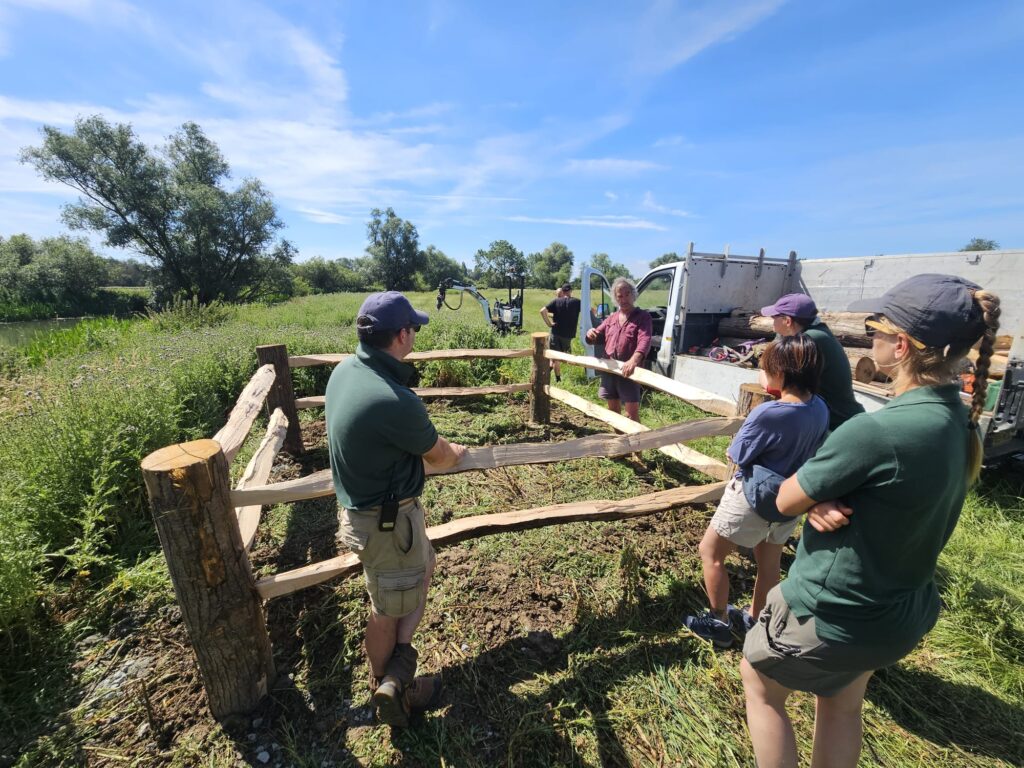
Before any trees are planted, robust tree guards made from durable sweet chestnut are being installed to protect them from grazing cattle while they become established.
The installation has also become an opportunity to share practical conservation skills. Volunteers and wardens have been trained to build and install the guards, knowledge that can support future planting projects across the city.
Planting will take place during the dormant season, when cooler conditions give young trees the best chance of establishing successfully.
Community involvement will continue throughout the project, with volunteers helping to take willow cuttings from existing trees and plant them on the meadows. There is also the possibility that local people may help nurture young black poplar saplings until they are large enough to be planted into the landscape.
The project has already attracted positive comments from visitors enjoying Grantchester Meadows, many welcoming the prospect of additional shade along this much-loved stretch of the River Cam as summers become warmer.
Natalie Lambert, Biodiversity Projects Officer, Cambridge City Council
“Succession planting is about thinking ahead. The magnificent willows we see today won’t be here forever, so we’re planting the next generation now. These trees will help support wildlife, strengthen the riverbanks and ensure this special landscape continues to thrive for decades to come.”
Mike Hakata, Chief Executive of Cambridge Past, Present & Future, added:
“Grantchester Meadows is one of Cambridge’s most treasured landscapes, and caring for it means thinking beyond our own generation. By working together to establish the next generation of riverside trees, we’re investing in the long-term health of the meadows, protecting wildlife and ensuring this special place can be enjoyed by future generations. We’re proud to be working alongside Cambridge City Council and King’s College on a project that demonstrates the value of long-term conservation.”
This work forms part of the wider DiversiTree and River Cam CAN initiatives, bringing together organisations, landowners and local communities to improve the health, resilience and biodiversity of the River Cam and its surrounding landscapes through long-term collaborative action.