Hinxton Watermill: keeping history moving
At Hinxton Watermill, the challenge isn’t simply preserving an old building. It is keeping a piece of working history alive.
Recent repairs have included work to the bridge head, using locally sourced saddle bricks, as well as repairs to the brickwork beneath the bridge arch and inside the turbine tunnel. Some of that meant installing scaffolding just above the water, with the team quite literally wading in to carry out the work.
But the most important challenge is hidden below the surface.
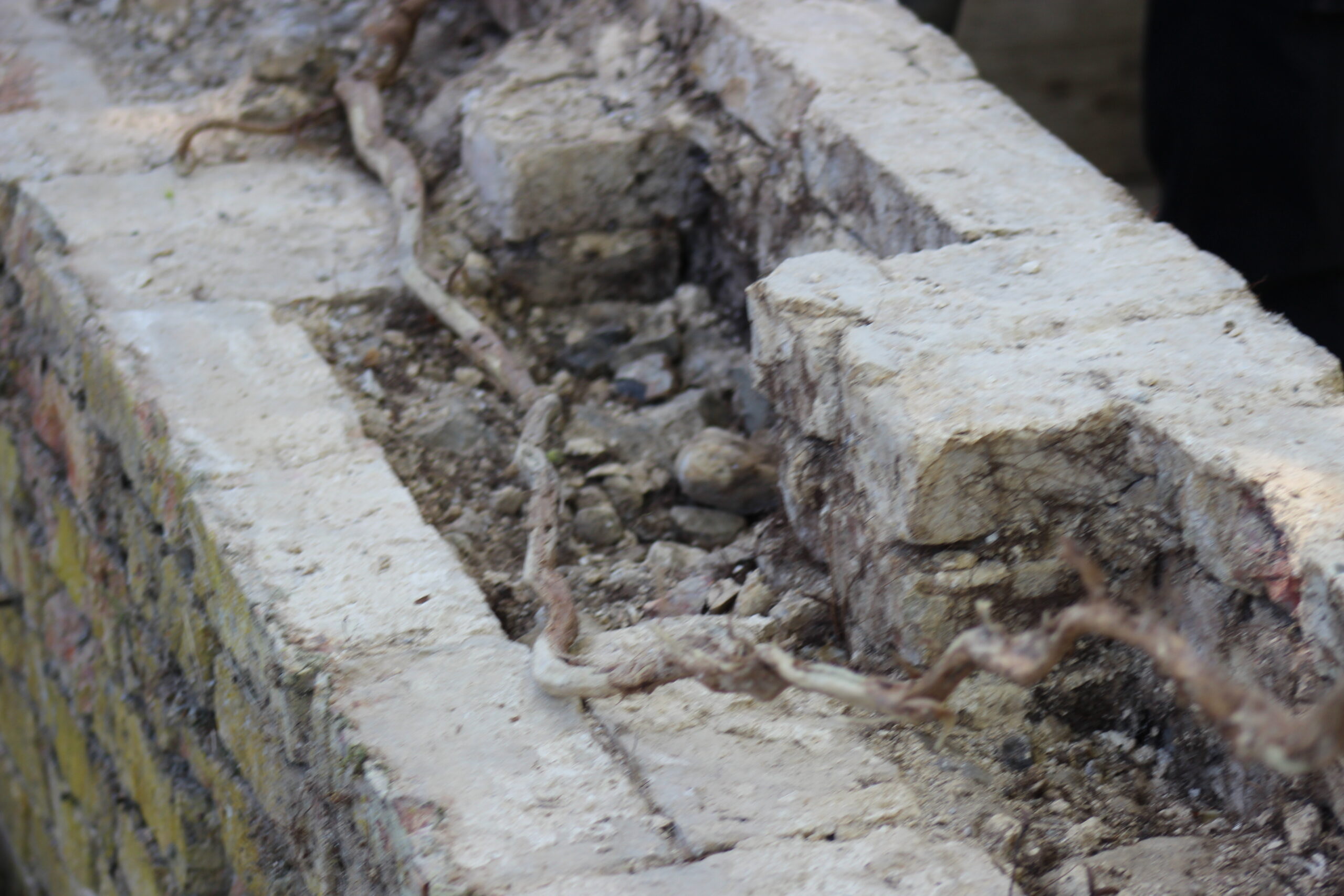
Water has been finding its way beneath part of the mill, where a cavity has developed close to the foundations of the gable end of the building. Movement in the structure has prompted plans for further investigation and stabilisation, requiring the mill’s waterways to be drained.
Another section of the water channel is also being undermined, leaving part of it without adequate support. Repairing it will help protect the historic machinery and huge grinding stones it supports.
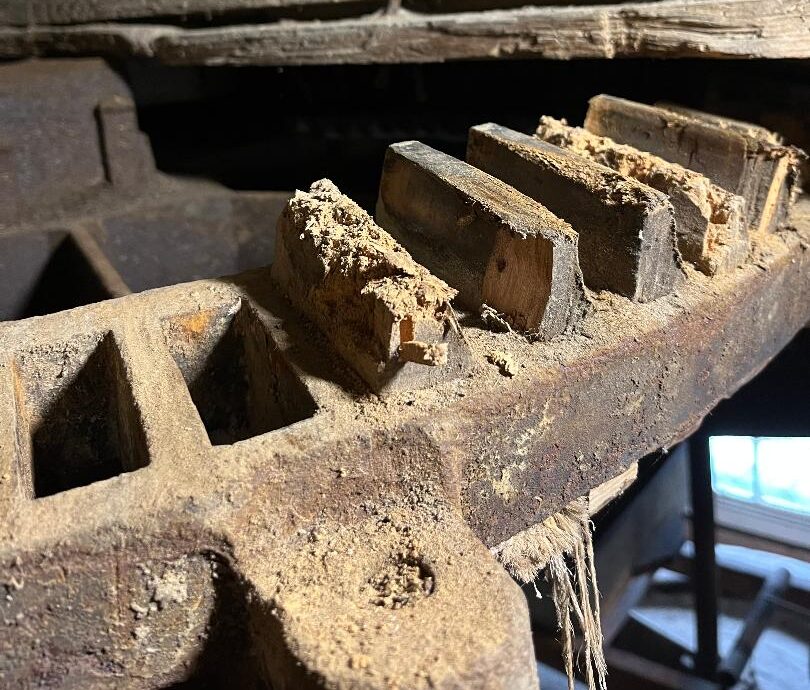
Hinxton remains a working watermill, which means maintaining the machinery as carefully as the building around it. A specialist millwright has already been working on the mechanism, balancing it and replacing some of its wooden gear teeth.
Why wooden teeth?
Wooden gear teeth are a feature of traditional mill machinery. One practical advantage is that individual teeth can be replaced when they wear out, rather than replacing the whole gear.
Behind all this work is a team of 16 volunteers who help keep the mill running and open to visitors. Experienced mill operators are passing their knowledge on to new volunteers, helping ensure that it isn’t only the machinery that survives, but the skills needed to operate it.
The repairs at Hinxton have been funded by the generosity of our members and donors, the local community in Hinxton and the Pilgrim Trust.
“Hinxton isn’t just a historic building, it’s still a working mill. Our job is to keep it working.”
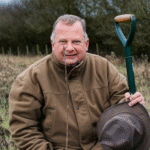
Allan Scott-Davies, Estate Manager
Wandlebury Ring Wall: a 26-year repair job
At Wandlebury Country Park, work to repair the historic Ring wall began around the year 2000.
In 2026, twenty-six years later, another major stretch was completed.
Repairing a historic wall on this scale isn’t simply a matter of replacing a few loose bricks. Sections have required painstaking conservation over many years, with the latest completed stretch around 100 metres long.
A small section remains to be repaired, but the project is a reminder of the timescales involved in caring for historic places. Conservation is often a commitment made over decades.
And while work continues above ground, Wandlebury is still giving up surprises beneath it.
What lies beneath?
A large underground cistern has recently been rediscovered beneath the courtyard.
Almost a storey and a half deep and extending beneath a significant part of the courtyard, the circular structure was historically used to collect water for the horses kept at Wandlebury, at a time when there was no convenient water supply on the hill.
It was later capped and largely forgotten, although an access grille remained.
Now there is the intriguing possibility of putting this historic piece of infrastructure back to work.
Rainwater from surrounding roofs could potentially be directed into the cistern once again, creating a stored supply that could help provide water for Wandlebury’s pond.
An old solution, perhaps, to a very current problem.
Bourn Windmill: caring for ancient timbers
At Bourn Windmill, one of the oldest windmills in the country, parts of two of the timbers are beginning to deteriorate where they sit inside the central hub. Plans for specialist repairs involve securing them with specially made bolts.
It’s important work. Windmill sails are substantial structures, and keeping them safe requires regular inspection and maintenance.
Visitors might wonder why CPPF doesn’t simply set the sails turning and bring the mill back into operation.
Although the machinery is maintained, running the sails continuously would introduce vibration into a structure that has stood for centuries. Decisions about operating the mill must therefore be guided by what the historic structure can safely withstand.
Volunteers move the sails regularly under the guidance of the millwright as part of the maintenance regime.
On a recent visit, the millwright surprised those watching below by appearing through the tiny hatch at the very top of the mill before climbing out onto the sails to inspect them at close quarters.
More than buildings
A watermill, a wall and a windmill require very different kinds of care. But the principle behind the work is the same.
Looking after heritage means understanding how a place was built, recognising how it is changing and making careful decisions about what needs to be repaired, adapted or sometimes simply left alone.
It also relies on people: specialist craftspeople, millwrights, contractors, staff and volunteers, often passing highly particular knowledge from one person to another.
These places have already survived for centuries. Our job is to give them the best possible chance of surviving for centuries more.
This careful, continuing work depends on the support of our members and donors. Become a Guardian of Cambridge and help us care for historic places and keep their stories alive for future generations